

Volinga 3DGS
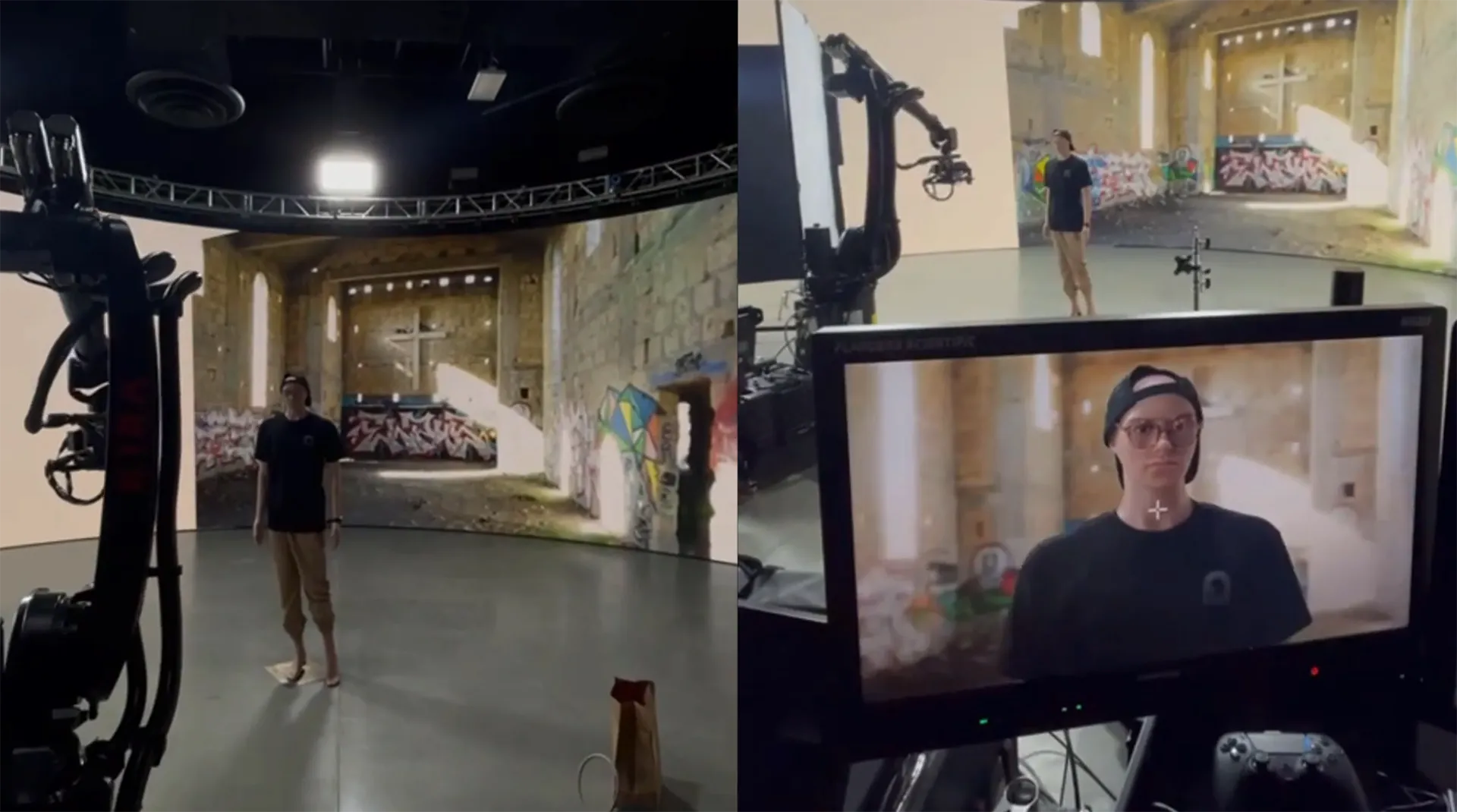
Volinga provides an end-to-end pipeline for generating, optimising, and exporting volumetric assets for VFX, virtual production, broadcast and film.
Volinga transforms 2D image or video datasets into photorealistic 3D environments and provides a pipeline for utilising 3D Gaussian Splatting (3DGS) scenes in Unreal Engine based workflows.
For more information on Volinga, refer to the Volinga website.
For full workflow documentation, refer to the Volinga documentation.
3D Gaussian Splatting (3DGS)
Section titled “3D Gaussian Splatting (3DGS)”3D Gaussian Splatting (3DGS) is a real-time radiance field representation developed by INRIA and the Max Planck Institute.
In 3DGS, a scene is reconstructed as a collection of optimised 3D Gaussians, each containing colour, opacity, and spatial data.
For current Disguise workflows, 3DGS is the supported representation for volumetric capture, while earlier NeRF-based workflows have been deprecated.
Volinga Suite
Section titled “Volinga Suite”Volinga provides the following products:
- Volinga Suite – for creating and editing 3D Gaussian Splatting (3DGS) content.
- Volinga Plugin – for integrating 3D Gaussian Splatting (3DGS) content into Unreal Engine workflows and into Disguise via RenderStream.
Volinga supports ACES and OCIO for accurate colour management.
Integration
Section titled “Integration”Volinga brings 3DGS volumetric content into the Disguise ecosystem.
For all new projects, the Volinga Unreal Engine Plugin together with the Disguise Unreal Engine RenderStream Plugin is the recommended workflow. The native Volinga RenderStream plugin remains available for legacy projects but is no longer the focus of feature development or active updates.
Unreal Engine 5 Plugin
Section titled “Unreal Engine 5 Plugin”Unreal Engine via RenderStream (Recommended)
Section titled “Unreal Engine via RenderStream (Recommended)”This workflow uses the Volinga Unreal Engine plugin to render 3DGS content inside Unreal Engine, with frames streamed into Designer using RenderStream via the Disguise Unreal Engine RenderStream plugin.
Scene Composition
Import .nvol or .ply assets into the Unreal Content Browser and place multiple volumetric actors within a single level.
Camera Integration
3DGS actors respect Unreal Cine Camera parameters, including focal length, sensor size, and camera transforms.
Production Tooling
Supports advanced relighting, optimisation controls, and access to Volinga Plugin Pro features.
This workflow aligns with standard Unreal Engine integrations within the Disguise ecosystem.
Legacy
Section titled “Legacy”Designer (r24.4+) supports direct playback of .nvol assets without a game engine.
This workflow maps volumetric content directly to LED surfaces without the need for Unreal Engine. However, it is important to note that you will not have access to advanced relighting, the latest optimisation features, or any ongoing feature expansion. For legacy workflow information, refer to the Volinga documentation.
Supported asset formats
Section titled “Supported asset formats”Volinga supports the following 3DGS asset formats:
- NVOL – Generated by Volinga Suite. Includes extended metadata, including colour information.
- PLY – 3D Gaussian Splatting assets generated by supported third-party pipelines.
NVOL remains the primary output format of Volinga Suite.
NeRF support
Section titled “NeRF support”While 3DGS is the recommended standard, Volinga continues to support Neural Radiance Fields (NeRF) for specific use cases like complex refractive surfaces.